 Skip to main content
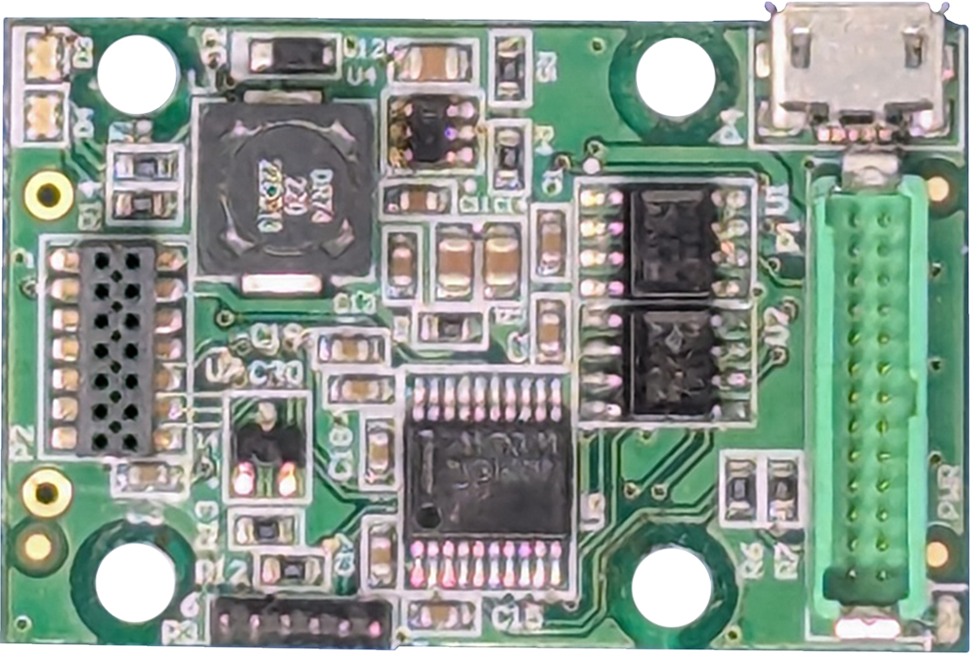
STONY MOUNTAIN, Manitoba – MicroPilot introduces its CAN Bus Autopilot I/O Expansion, offering eight PWM servo outputs and remote compass support. An autopilot supports two boards, with connections carried over CAN bus.
In a UAV, the position of the flight controller does not necessarily match the locations where control connections are needed. Servos and other aircraft subsystems can be distributed across the airframe, requiring individual cable runs through wings, fuselage sections and equipment compartments. As those connections multiply, harness routing becomes an increasingly important part of the integration process.
Distributed I/O changes how those connections are arranged. A shared communications bus links equipment at different locations, allowing local interfaces to serve nearby components. This approach gives designers a way to organize control wiring around the aircraft’s physical layout.
CAN uses differential signaling, carrying information through the voltage difference between two conductors. This provides a communications method suited to distributed electronics, where cable routing and electrical interference must be considered together.
MicroPilot’s arrangement allows I/O to be positioned near the equipment it serves, reducing wiring back to the autopilot. Construction features include high-reliability connectors, conformal coating/underfill, environmental stress screening and IPC Class 3.
Aircraft developers can contact MicroPilot to discuss their proposed installation, connection requirements and system configuration.
About MicroPilot
MicroPilot supplies autopilot hardware, ground control software and accessories for UAV manufacturers. Its product range also includes development tools for customizing and integrating autopilot systems.
Product enquiries: info@micropilot.com
Further information: MicroPilot accessories
